Why Can My Child Follow a Maths Example but Not Solve a New Problem?
A child can follow a maths example but not solve a new problem when the visible steps make sense but the underlying structure remains hard to recognise. Calculation is often not the main obstacle. The child must identify the mathematical idea beneath a different presentation and choose a method without the example making that choice for them.
Following a route and finding one look similar on paper. Mentally, they are different tasks.
Why can a child follow a maths example but not solve a new problem?
A worked example supplies several decisions before the pupil starts:
- which information matters;
- which operation or method fits;
- which order the steps follow;
- whether the chosen approach is correct.
The pupil can genuinely understand why one line leads to the next. What they have not yet demonstrated is that they can identify the route independently.
A fresh problem removes the visible route. The wording, diagram or position of the values changes, and an irrelevant detail may appear.
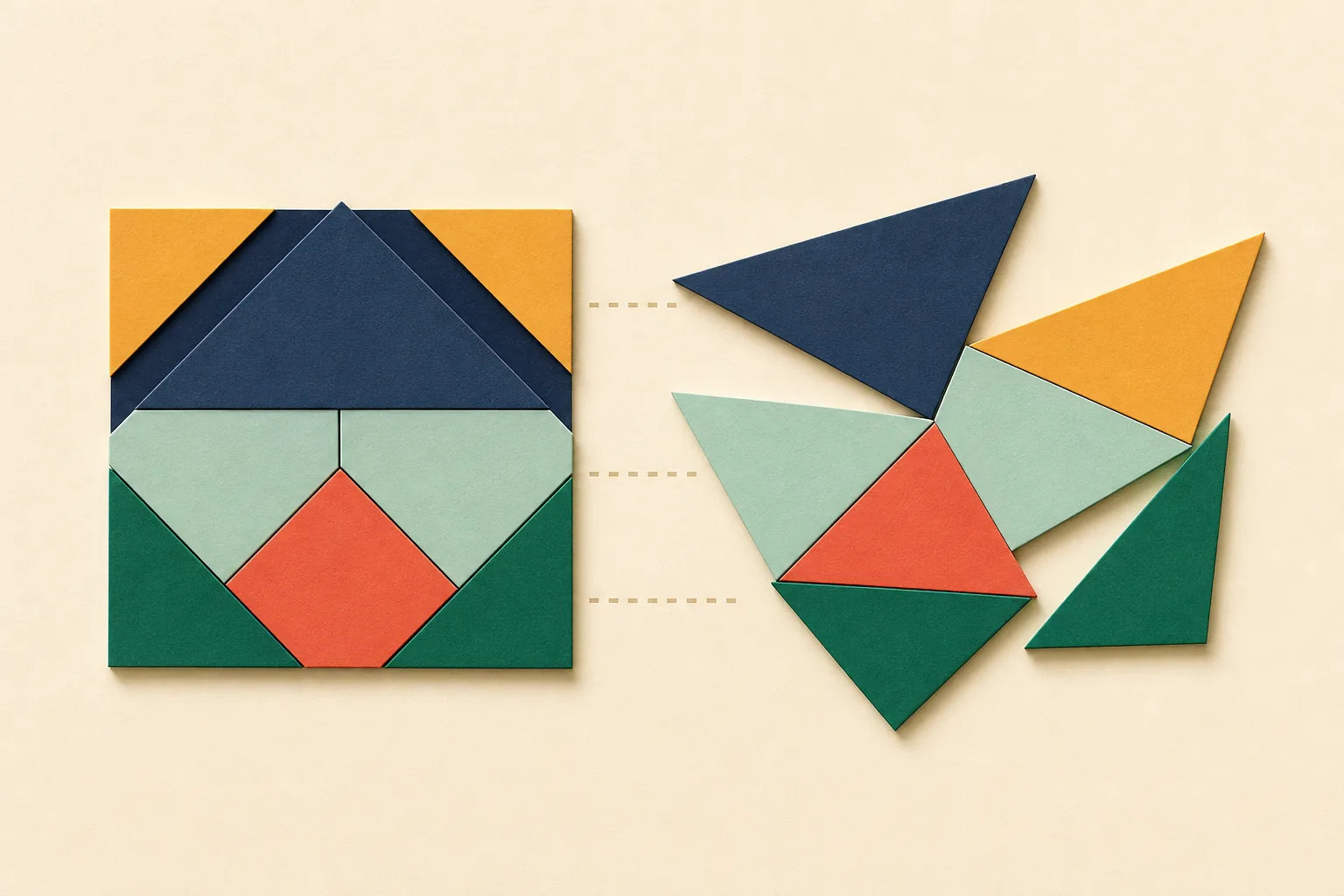
The example names the method → the pupil follows familiar steps → the new problem removes those clues → the pupil must recognise the hidden structure before calculating.
That classification step is easy to miss because it happens before anything appears on the page.
Surface details can hide the same mathematics
Daniel Willingham distinguishes surface features from deep structure. Problems about different objects can express the same mathematical relationship. Problems that look almost alike can also require different methods.
Experienced learners recognise the deeper relationship because they have met it in varied forms. A novice naturally notices the visible details first. If every proportion exercise has the same layout, that layout can become the cue. Once it changes, the method seems to disappear.
Three patterns can point to this problem:
- the pupil can calculate once someone names the method;
- familiar layouts are manageable, but new wording causes a stop;
- the first question is about which formula to use, not what the problem means.
These signs suggest that the calculation may be available while the category is not yet secure.
Working memory may be carrying too much
Barbara Oakley adds another explanation. Working memory has limited space. An unfamiliar problem may require the pupil to hold the goal, the given information, an intermediate result and possible operations in mind at once.
If basic operations still demand close attention, little space remains for comparing methods or checking why a step belongs. Practice can group separate steps into a familiar mental “chunk”. This does not replace understanding; it frees attention for the whole problem.
The same blank page can therefore reflect different difficulties:
- the deeper structure is not yet recognisable across varied examples;
- the smaller calculations are not fluent enough to leave room for selection;
- both demands arrive together and overload attention.
Another explanation of the completed example may not distinguish between them.
Repetition teaches the method; variation teaches the choice
Several similar exercises can establish a new procedure. But a long block of one problem type also reveals the method in advance: every question on the page calls for the same approach.
Mixed practice returns the choice to the pupil. It requires three questions in order:
- What mathematical relationship is present?
- Which method matches that relationship?
- How should the calculation now be carried out?
This feels slower than repeating one format because selection is now part of the work. Comparing two different-looking problems with the same principle can make that work visible. Comparing two similar-looking problems that need different methods reveals which features actually matter.
What to notice before the first calculation
“They did not understand” is too broad to explain the difficulty. A pupil may understand every shown step but not know when to use it. They may recognise the method but lose track because smaller operations still require too much attention.
The moment before calculation is more informative. Can the pupil restate the question, identify the relevant information and explain why one method fits better than another? Those answers separate recognition, selection and calculation.
The worked example shows whether a child can follow a marked route. The new problem shows whether they can identify that route for themselves.
Sources behind this article
- Daniel Willingham, Why Students Don’t Like School
- Barbara Oakley, Uncommon Sense Teaching